

 For many families, pets are household members. They sleep in beds, share living spaces and, in some cases, share meals. That closeness provides benefits for both people and animals, but it also creates opportunities for the spread of antimicrobial-resistant organisms.
During the Saturday session “The Pets We Love, the Risks We Overlook: Antibiotic Use and Resistance in Companion Animals,” speakers explored whether companion animals serve as reservoirs for antimicrobial resistance, how veterinary antibiotic prescribing is evolving and what health care facilities should consider when incorporating animals into patient care.
Stephen Cole, VMD, MS, DACVM, associate professor of microbiology and director of the Clinical Infectious Disease Laboratory at the University of Pennsylvania, opened with a simple observation: “Most Americans find that their pets are part of their family,” he said.
Surveys show that 97% of pet owners consider pets family members, and many report close physical contact, including kissing pets, sleeping with them and sharing food.
Antimicrobial Resistance
That level of interaction raises questions about whether companion animals contribute to the spread of multidrug-resistant organisms. Dr. Cole cautioned against assuming that detection alone makes an animal a reservoir.
Research has focused on organisms including carbapenem-resistant Enterobacterales, methicillin-resistant staphylococci, extended-spectrum beta-lactamase-producing organisms, Clostridioides difficile and multidrug-resistant Campylobacter.
Among those, multidrug-resistant Campylobacter provides some of the strongest evidence for animal-associated transmission. The organism can persist in the gastrointestinal tracts of animals, particularly puppies, and has been linked to multistate outbreaks.
“We know that it can persist, amplify and spread,” Dr. Cole said.
The evidence is less clear for other pathogens. Young animals can carry C. difficile, but available data suggest transmission is more common from people to animals than the reverse.
Methicillin-resistant Staphylococcus pseudintermedius remains a particular challenge in veterinary medicine. Resistance rates are especially high among animals with chronic dermatologic conditions. By contrast, Staphylococcus aureus, including methicillin-resistant S. aureus, is encountered relatively infrequently in pets.
“Staph aureus is incredibly rare for us to find in pets,” Dr. Cole said.
One concern is the persistence of resistant organisms. Animals colonized with certain multidrug-resistant pathogens may carry them for extended periods, creating opportunities for spread within households or veterinary settings. Still, direct evidence of pet-to-human transmission remains limited.
“Bottom line, it probably happens very rarely,” Dr. Cole said.
The risk appears to increase when either the person or the animal is ill, though he emphasized that identifying shared strains does not prove the direction of transmission.
Pets and Antimicrobial Stewardship
But pets have a role to play in stewardship. Jane Sykes, BVSc, PhD, MPH, MBA, DACVIM (SAIM), FACVIM (Founding), professor of small animal internal medicine (infectious diseases) at the University of California, Davis, reviewed efforts to improve antibiotic use in companion animals.
More than 60% of U.S. households have a companion animal, and many of those animals will receive antibiotics during their lifetimes. Yet until recently, relatively little was known about prescribing patterns.
Point prevalence surveys have begun to fill that gap. One survey found that approximately 30% of veterinary patients were receiving antibiotics on a given day. Referral practices prescribed antibiotics more frequently than primary care clinics, and only about 30% of treated animals had confirmed evidence of infection.
Skin conditions were the most common indication, followed by gastrointestinal and surgical conditions.
Veterinary stewardship guidelines first emerged in 2011 and now cover urinary tract infections, pyoderma and respiratory diseases. Recent updates have emphasized reducing unnecessary systemic antibiotic use, particularly for superficial skin infections.
“There is a lot of evidence that antimicrobial stewardship in companion animals matters,” she said.
Stewardship efforts have also focused on shortening antibiotic durations and reevaluating routine surgical prophylaxis. Barriers remain, including limited resources, insufficient susceptibility testing, financial constraints and owner expectations. More than 70% of veterinary practices surveyed expressed interest in prescribing guidelines, continuing education and stewardship resources.
Animals in Health Care Settings
Ana Vaughan-Malloy, MD, assistant professor of pediatrics and associate hospital epidemiologist at Boston Children’s Hospital and Harvard Medical School, discussed the growing use of therapy animals and facility dogs.
“Sometimes the best medicine has four legs and a fabulous wet nose,” she said.
Animal-assisted interventions have been associated with benefits including improved mobility, reduced anxiety and lower perceptions of pain among hospitalized children and adolescents. At the same time, hospitals must consider risks, including allergies, bites, scratches and the potential for animals to carry multidrug-resistant organisms, Dr. Vaughan-Malloy said.
Developing successful programs requires collaboration among infection prevention teams, clinical staff, volunteer services, hospital leaders, patient advocates and legal counsel. Facilities must establish standards for animal health, vaccination, diet, grooming and behavior.
Hospitals also need clear policies defining where animals are permitted, which patients may be excluded and how visits will be supervised.
At Boston Children’s Hospital, personal pets generally are not allowed in the workplace. Exceptions may be considered in special circumstances, such as end-of-life. The hospital does have facility dogs and allows service animals and volunteer therapy dogs under established oversight processes.
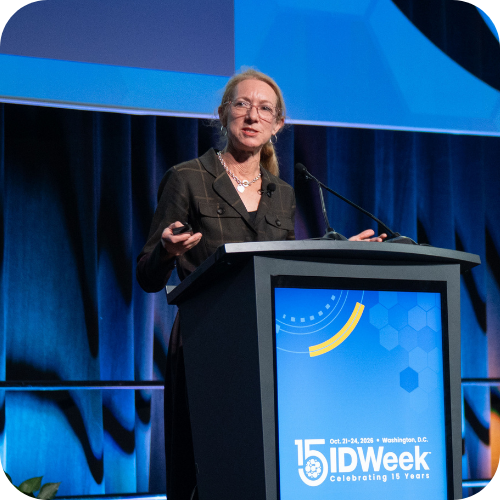
Photo: “There is a lot of evidence that antimicrobial stewardship in companion animals matters,” said Jane Sykes, BVSc, PhD, MPH, MBA, DACVIM (SAIM), FACVIM (Founding), at a Saturday session.