

 Recent outbreaks across Latin America have highlighted how changing environmental conditions, expanding surveillance and strained health systems are reshaping the region’s infectious disease landscape.
During the Saturday session “Outbreak Lessons From Latin America,” speakers reviewed the emergence of Oropouche virus, the resurgence of yellow fever and lessons learned from the largest dengue epidemic in the region’s history.
Oropouche
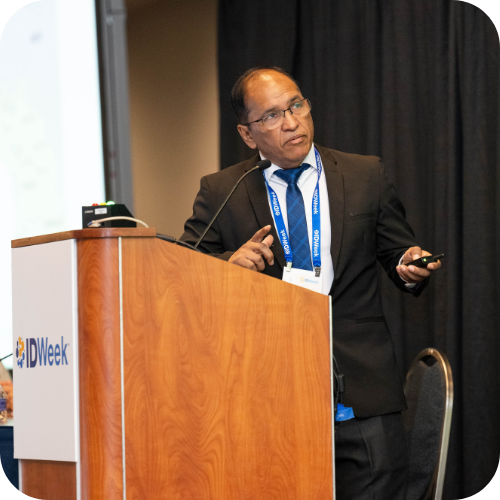
Martin Casapia, MD, associate professor of medicine at the Universidad Nacional de la Amazonía in Peru, discussed Oropouche virus, an arbovirus that has circulated in the Americas for decades but has historically received limited attention because of inadequate surveillance.
Although the virus was first isolated in 1955 and caused its first major outbreak in 1961, many countries have lacked routine systems to detect it. As surveillance has expanded, reported cases have climbed sharply. More than 16,000 cases were reported in 2024 across 11 countries and one territory, with most occurring in Brazil. By late 2025, nearly 13,000 additional cases had been reported.
The virus circulates primarily through biting midges, particularly Culicoides paraensis, with nonhuman primates and sloths playing roles in transmission cycles. Genomes allow reassortment, creating genetic variants that may contribute to differences between outbreaks.
“When we checked, the last outbreak of Oropouche in Peru [was] different from the Oropouche in Brazil,” Dr. Casapia said. “We have different clinical manifestations.”
Data from 100 cases in Loreto, Peru, showed a median patient age of 28 years, with 8% requiring hospitalization and no deaths reported. Abdominal pain and vomiting were common warning signs. Six pregnant women were identified in the cohort, with no reported complications.
Clinically, Oropouche can resemble dengue during its initial phase, presenting with fever, headache, nausea and vomiting. However, Dr. Casapia emphasized a characteristic pattern in which symptoms improve before returning days later.
“After some days, the patient recovers,” he said. “[It] looks like they are much better for three, four or five days. Then a relapse.”
Neurologic complications, including aseptic meningitis, encephalitis and Guillain-Barré syndrome, have also been documented. “We can say that Oropouche has confirmed neurotropism,” Dr. Casapia said.
Yellow Fever
Wilmer Villamil Gomez, MD, MSc, research professor of infectious diseases and tropical medicine at Universidad Simón Bolívar in Colombia, described a resurgence in yellow fever in South America that produced more than 500 confirmed cases and 219 deaths in 2024 and 2025, a case-fatality rate of approximately 43%.
“Colombia is bearing a huge portion of that burden,” he said.
One focal outbreak occurred in Colombia’s Tolima region, where yellow fever reappeared after roughly a century. Dr. Villamil Gomez pointed to several contributing factors, including La Niña conditions, rural ecotones (transition areas between ecological communities) and deforestation.
Patients commonly presented with hemorrhagic manifestations, jaundice, circulatory collapse, encephalopathy and renal failure. To improve outcomes, clinicians used a structured triage system that stratified patients according to warning signs, social risk factors and organ dysfunction, helping guide decisions about outpatient management, hospital admission and intensive care.
Dr. Villamil Gomez highlighted surveillance, targeted immunization, travel restrictions and One Health preparedness as priorities for future response efforts.
Dengue
Susana Lloveras, MD, head of medical zoopathology at Dr. Francisco J. Muñiz Infectious Diseases Hospital in Argentina, reviewed the extraordinary dengue epidemic that swept Latin America in 2024.
In 2023, the World Health Organization classified dengue as a Grade 3 emergency, its highest level of emergency response. One year later, Latin America became the global epicenter of dengue transmission, accounting for roughly 90% of reported cases worldwide.
More than 13 million cases, 22,000 severe cases and more than 8,000 deaths were reported in 2024, placing enormous pressure on health systems throughout the region.
“Dengue is no longer just a seasonal disease,” Dr. Lloveras said. “It’s a consistent challenge for the health system.”
The epidemic spread across Brazil, Argentina, Mexico and Colombia and expanded farther south than in previous years. Cases rose more quickly and peaked earlier than during 2023, while all four dengue serotypes circulated simultaneously in the Americas.
“We need to look beyond serotypes and understand which lineages are circulating and how they are spreading,” Dr. Lloveras said.
Although cases declined substantially in 2025, she cautioned against interpreting the decrease as a sign that the threat has passed. “Certainly, the risk in the region has not disappeared,” she said. “Dengue can change quickly from one year to another.”
Climate change, urbanization, population movement and changing serotype circulation continue to create conditions favorable for transmission. Rising temperatures support the spread of Aedes aegypti mosquitoes and accelerate viral development, while rapid urbanization creates additional breeding sites.
Dr. Lloveras emphasized that clinicians must focus not only on diagnosing dengue but also on identifying patients at risk for deterioration. Ultimately, she argued that preventing deaths depends as much on health system preparedness as on clinical expertise.
“We need to prepare before the peak,” Dr. Lloveras said. “We need to detect the signals early. We need to prepare the health system as a whole, and we need to act before hospitals are overwhelmed.”
Photo: Martin Casapia, MD, associate professor of medicine at the Universidad Nacional de la Amazonía in Peru, discussed the latest understanding of Oropouche virus.